
In a busy home, it is easy to ignore a flickering light or a loose outlet. However, your electrical system Electrical issues rarely happen out of nowhere—your home’s wiring usually drops warning signs before a major failure occurs. In Melbourne, Florida, our high humidity and salt air can speed up the corrosion of wires and electrical connections. Knowing what to look for can save you from a “fishy” smell turning into an expensive emergency.
Here are the most common electrical issues and simple ways you can spot them before you need an emergency electrician.
Common Signs of Electrical Wiring Problems
1. The Occasional “Zapping” Sound (Arcing)
Electricity should be silent. If you hear a buzzing, humming, or crackling sound coming from a light switch or an outlet, it is a sign that electricity is arcing. This happens when a wire is loose or damaged, and the current jumps across a gap to complete the circuit.
- How to spot it: Pay attention when you turn on a high-power appliance. If you hear a faint sizzle, stop using that outlet and call for electrical troubleshooting right away.
2. Flickering Lights When the AC Starts
It is common for lights to dim for a split second when a large appliance like your air conditioner kicks on. However, if the lights stay dim or continue to flicker, your electrical panel is likely struggling to distribute power.
- The Melbourne Factor: Our HVAC systems work hard year-round. If your lights flicker frequently, it may mean your circuit is overloaded or you need a panel upgrade to handle the modern power demands of a Florida home.
3. Outlets That Feel Warm to the Touch
Electrical outlets and switch plates should never feel hot. If an outlet is warm, too much heat is building up behind the wall—often caused by a loose connection or a circuit pushed past its limit.
- How to spot it: Place the back of your hand against outlets in use. If they feel notably warm or if you see any slight discoloration (like a yellowish or brown tint) on the plastic cover, it is a significant fire warning sign.
4. A “Fishy” or Burning Plastic Smell
This is one of the most serious red flags. When electrical insulation or plastic components begin to overheat, they emit a distinct odor that often smells like burning plastic or rotting fish.
- How to spot it: If you notice an odd, chemical-like smell in a room, follow your nose to the nearest outlets or the electrical panel. An electrical burning smell is an emergency—turn off the breaker immediately.
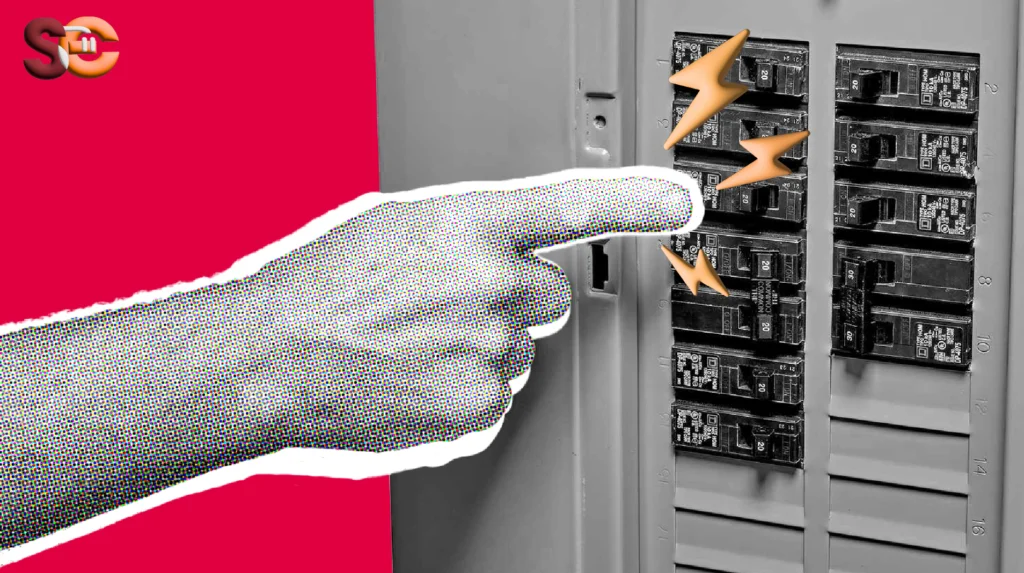
5. Circuit Breaker Keeps Tripping
Circuit breakers are built-in safety devices. While an occasional trip is normal if too many appliances are plugged in at once, a circuit breaker that keeps tripping signals a deeper issue like a circuit overload or a dangerous ground fault.
- How to spot it: If you are resetting the same breaker once a week, that circuit is unsafe. It is time to call a licensed electrician in Melbourne to find the root cause.
6. Loose or Wobbly Plugs
If you plug something in and the cord falls out, the internal springs in the outlet have worn out. Loose connections create resistance, and resistance creates heat.
- How to spot it: If a plug doesn’t stay firmly in the wall, it poses a sparking outlet risk. Replacing the outlet is an inexpensive fix that prevents a potential fire hazard.
Why Early Electrical Detection Matters
Most electrical fires don’t start with a giant explosion; they start with a small, overheated wire behind a wall that goes unnoticed. By taking five minutes every few months to check your outlets and lights, you can catch these issues while they are still simple, low-cost repairs.
What to Do During an Electrical Emergency
The Primary Safety Rule
If you see a spark, smell something burning, or feel heat where it shouldn’t be, do not wait.
Immediate Action Steps
- Shut Off Breaker Power: Turn off the power to the affected area at your main electrical panel immediately.
- Identify High-Risk Zones: Keep everyone away from overheating outlets, panels, or walls.
- Call a Professional: Contact a licensed, insured electrician in Melbourne for an immediate inspection and repair.